A V12, A METAL GATE AND A SHAPE THAT STILL FEELS IMPOSSIBLE.
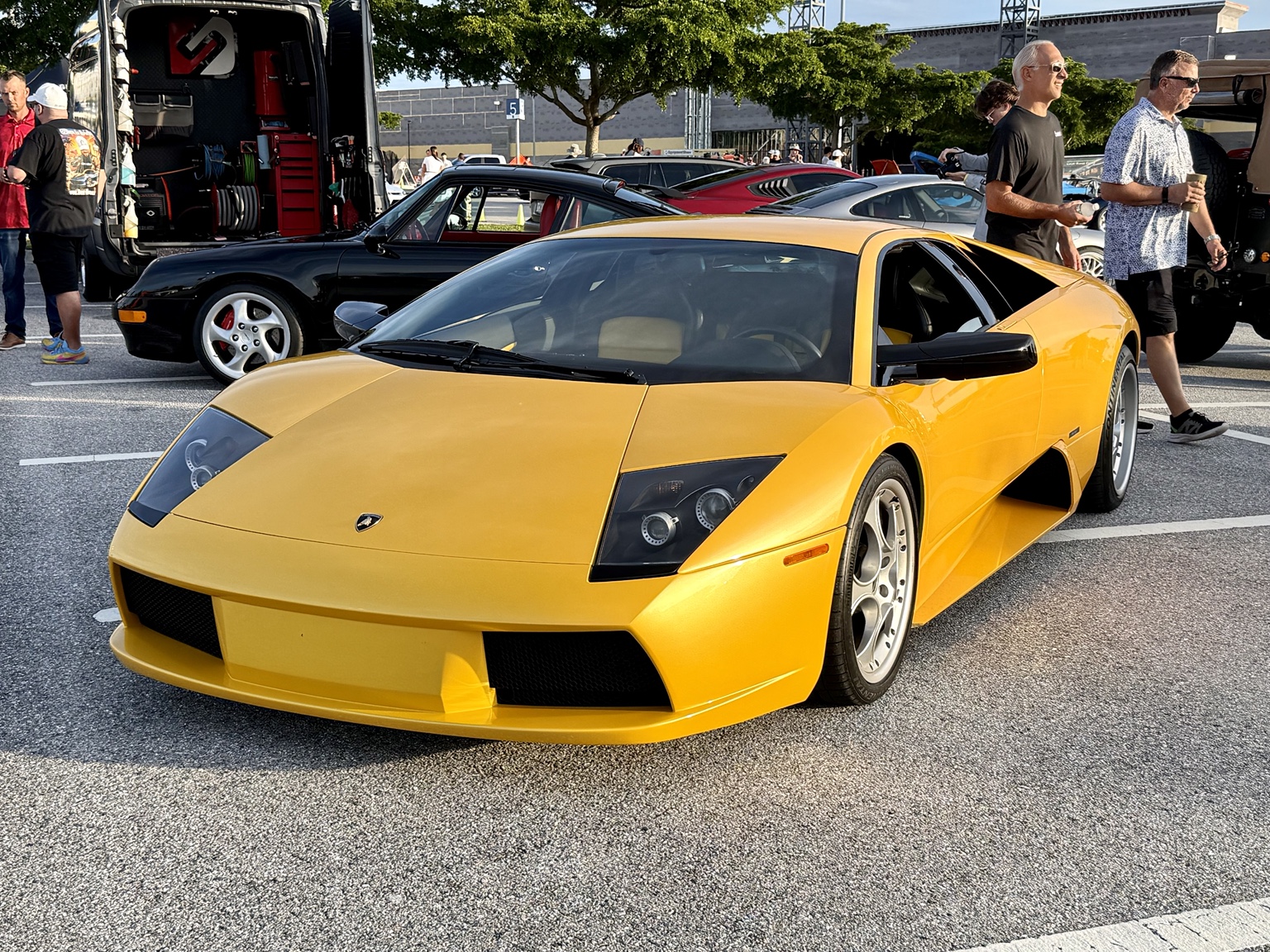
The Murciélago arrived in 2001 as Lamborghini’s first completely new car of the Audi era, but it did not abandon the theater that made the company famous. Luc Donckerwolke’s body kept the cab pushed forward, the roof impossibly low and the proportions unmistakably descended from the Countach and Diablo. Scissor doors remained part of the ritual. So did the sense that the engine behind the cabin was the center of the entire experience.
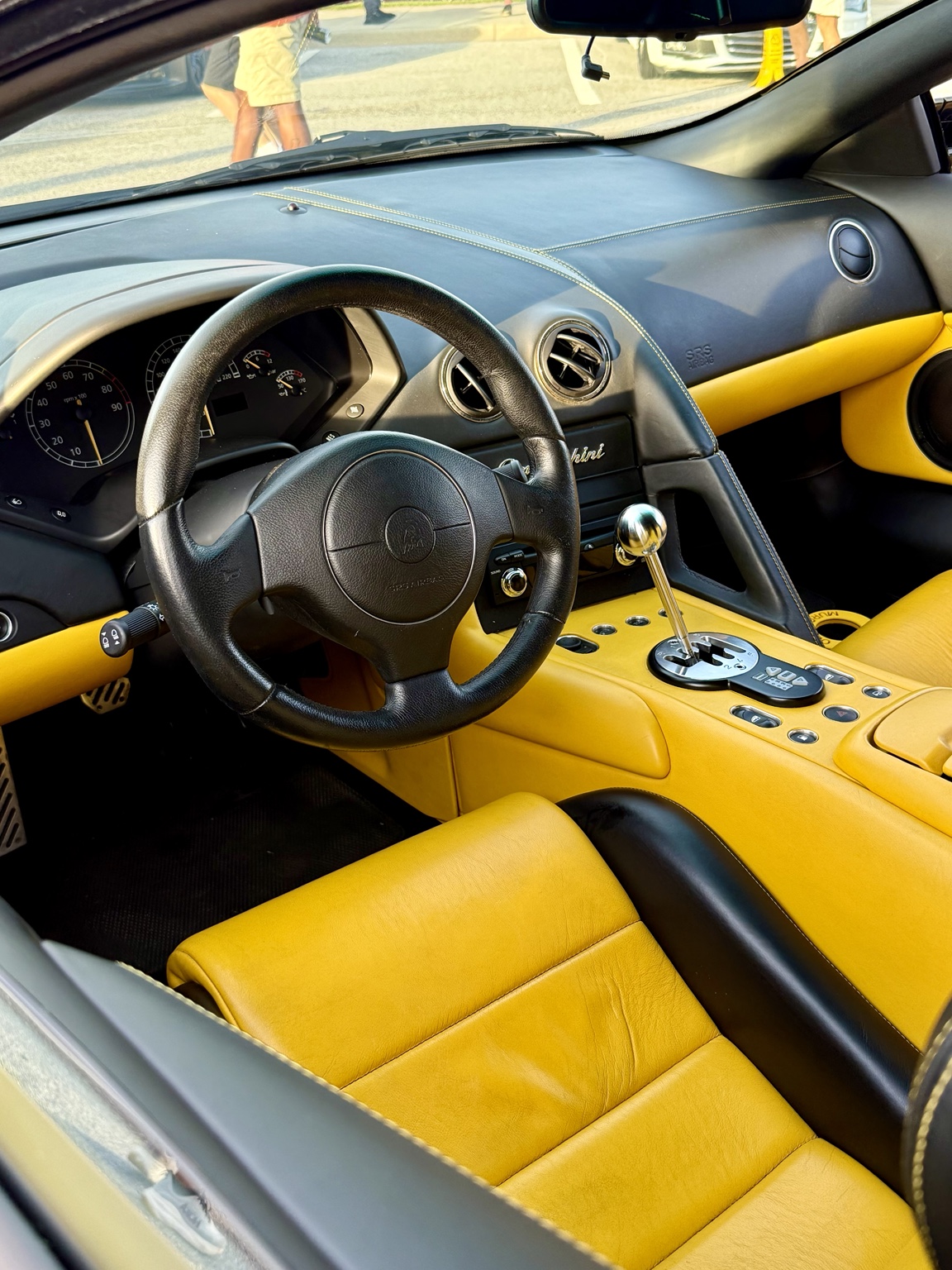
In its original form, the Murciélago used a 6.2 liter naturally aspirated V12 producing 580 CV at 7,200 rpm. Permanent four wheel drive helped put that power down, but the detail that gives this particular car its pull is inside. The exposed six speed gate turns every shift into a deliberate mechanical act, a flash of polished metal surrounded here by a yellow and black cabin as vivid as the bodywork.
“THE V12 PROVIDES THE FORCE. THE METAL GATE MAKES THE MOMENT.”
That combination belongs to a narrow point in Lamborghini history. The Murciélago connected the old flagship bloodline to a company entering a more modern era, then handed the role to the Aventador in 2011. Newer cars are quicker, more advanced and easier to use, but this one asks the driver to participate in a way that cannot be recreated by another screen or another drive mode.
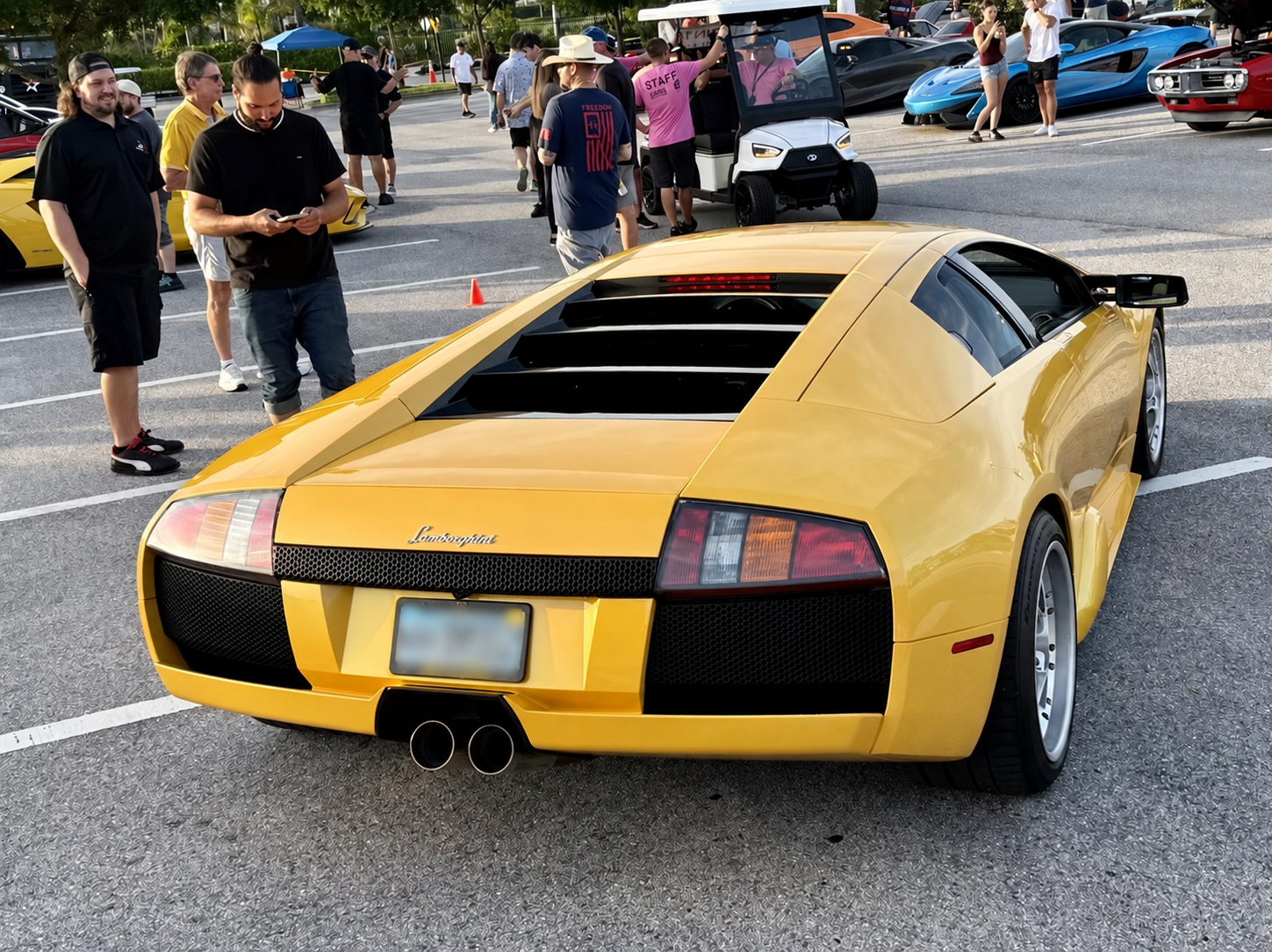
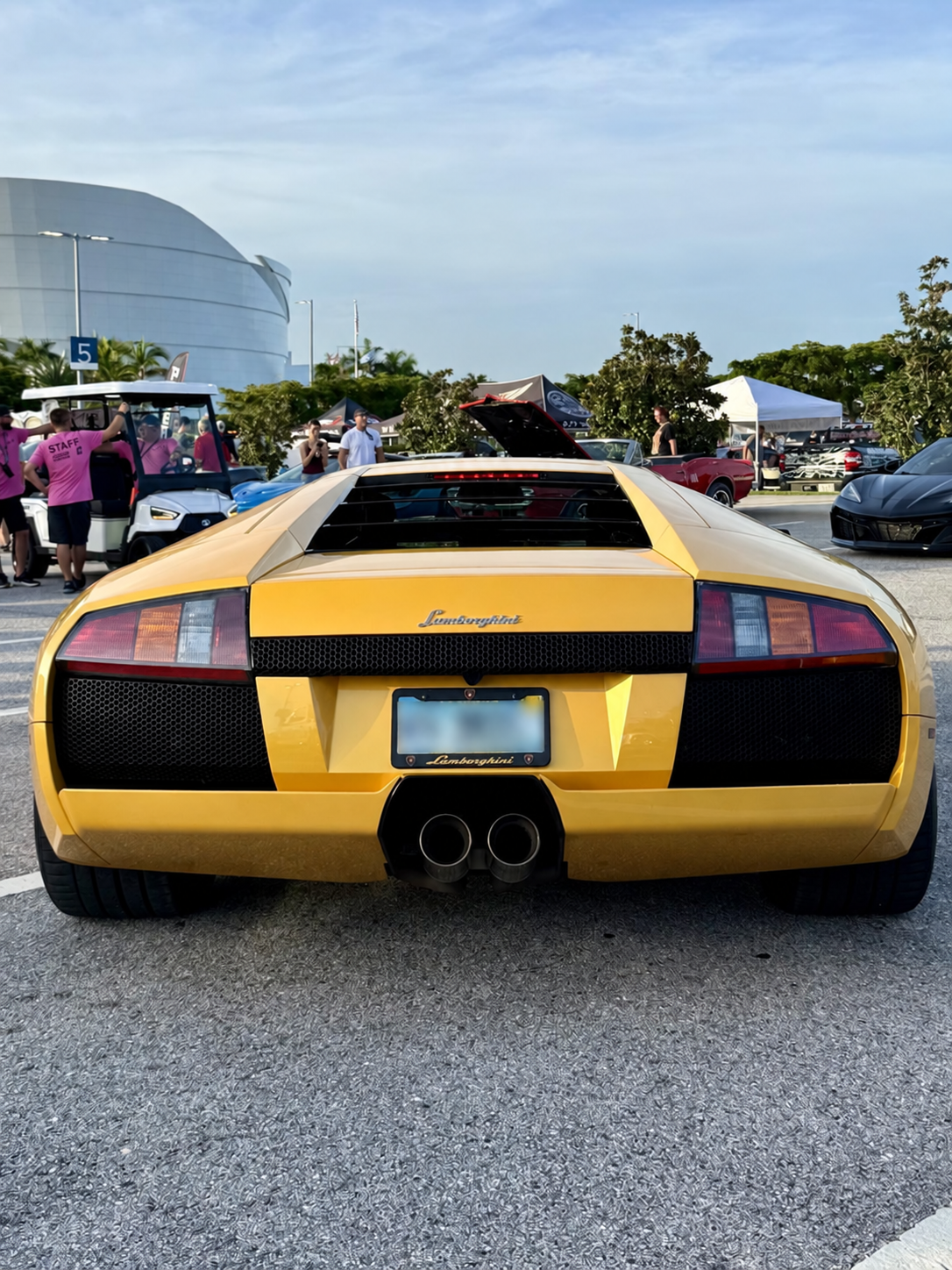
Seen at rest among newer exotics, the shape has lost none of its authority. The nose is simple and low. The rear is broad, open and dominated by twin center exhausts. Yellow leather carries the exterior color straight into the cockpit. Four photographs are enough to explain why the Murciélago remains more than a set of performance numbers. It is a machine built around occasion.